How Trigger-Based Automation in AI CRM Converts More Leads
Every business loses leads due to slow, inconsistent follow-up. Discover how trigger-based automation in an AI CRM detects key customer actions and instantly fires high-converting responses across SMS, WhatsApp, voice, and email.
Key Takeaway for Business Owners
Every business loses leads — not because the product is wrong, pricing is off, or the team does not care, but because follow-up is too slow, inconsistent, or lost in daily operational friction. Trigger-based automation in an AI CRM eliminates this follow-up gap at the root. By listening for high-intent customer actions (form submissions, missed calls, booked appointments, opened emails, and payment milestones) and immediately firing intelligent, multichannel responses, smart SMEs achieve a 391% boost in lead conversion and recover 15 to 25 wasted administrative hours every week.
Speed and contextual precision define modern commercial growth. In 2026, the companies capturing outsized market share do not hire armies of manual follow-up callers — they deploy event-driven AI CRM automation engines that engage prospects in under 60 seconds across WhatsApp, SMS, voice, and email.
Consider the commercial math behind inbound opportunity. When a prospective client fills out an enquiry form on your website or ad, their purchase intent peaks in the first sixty seconds. Research consistently proves that contacting a prospect within one minute increases lead qualification and conversion probabilities by 391%. Conversely, letting that enquiry sit for just thirty minutes drops your odds of qualification by more than 21 times. Despite this well-documented reality, over 55% of small and medium enterprises take more than 24 hours to initiate contact with an inbound lead, and nearly a quarter never follow up at all.
This breakdown is rarely caused by negligence. It stems from the systemic fragility of manual operations. In a typical growing company, sales reps juggle client deliveries, account managers step into unexpected meetings, and weekend inquiries land in unmonitored inboxes. Trigger-based automation flips this reactive paradigm on its head. Instead of expecting busy staff to remember when, where, and how to reach out, your AI CRM operates as an always-on nervous system: detecting signals, making contextual routing decisions, and dispatching hyper-personalized responses within seconds.
"I thought I had a lead generation problem. Turns out I had an execution and follow-up problem. Over 70% of our inbound inquiries were never touched more than once. When we transitioned to trigger-based AI CRM workflows, our conversion rate doubled within forty-eight hours without spending an additional dollar on traffic."
Deconstructing Trigger-Based Architecture: How Modern AI CRMs Work
Trigger-based automation is an event-driven engine governed by programmable IF-THIS-THEN-THAT logic, elevated by machine learning and natural language understanding. Unlike legacy autoresponders that blast static email newsletters at arbitrary calendar times, an event-driven automation engine listens for specific behavioral triggers and executes contextual sequences tailored to the contact's exact state in the sales pipeline.
- Delayed responses averaging 4 to 28 hours
- Human dependency prone to forgetfulness & fatigue
- One-size-fits-all batch emails with sub-18% open rates
- Unanswered incoming phone calls vanish forever
- Siloed tools requiring error-prone double entry
- Inconsistent touchpoints across sales representatives
- Instantaneous sub-60-second response across SMS & WhatsApp
- Autonomous 24/7 qualification and calendar booking
- Dynamic behavioral branches based on clicks, replies & views
- Instant missed-call-to-text recovery within 30 seconds
- Unified single source of truth across all channels and stages
- Algorithmic lead scoring and predictive smart routing
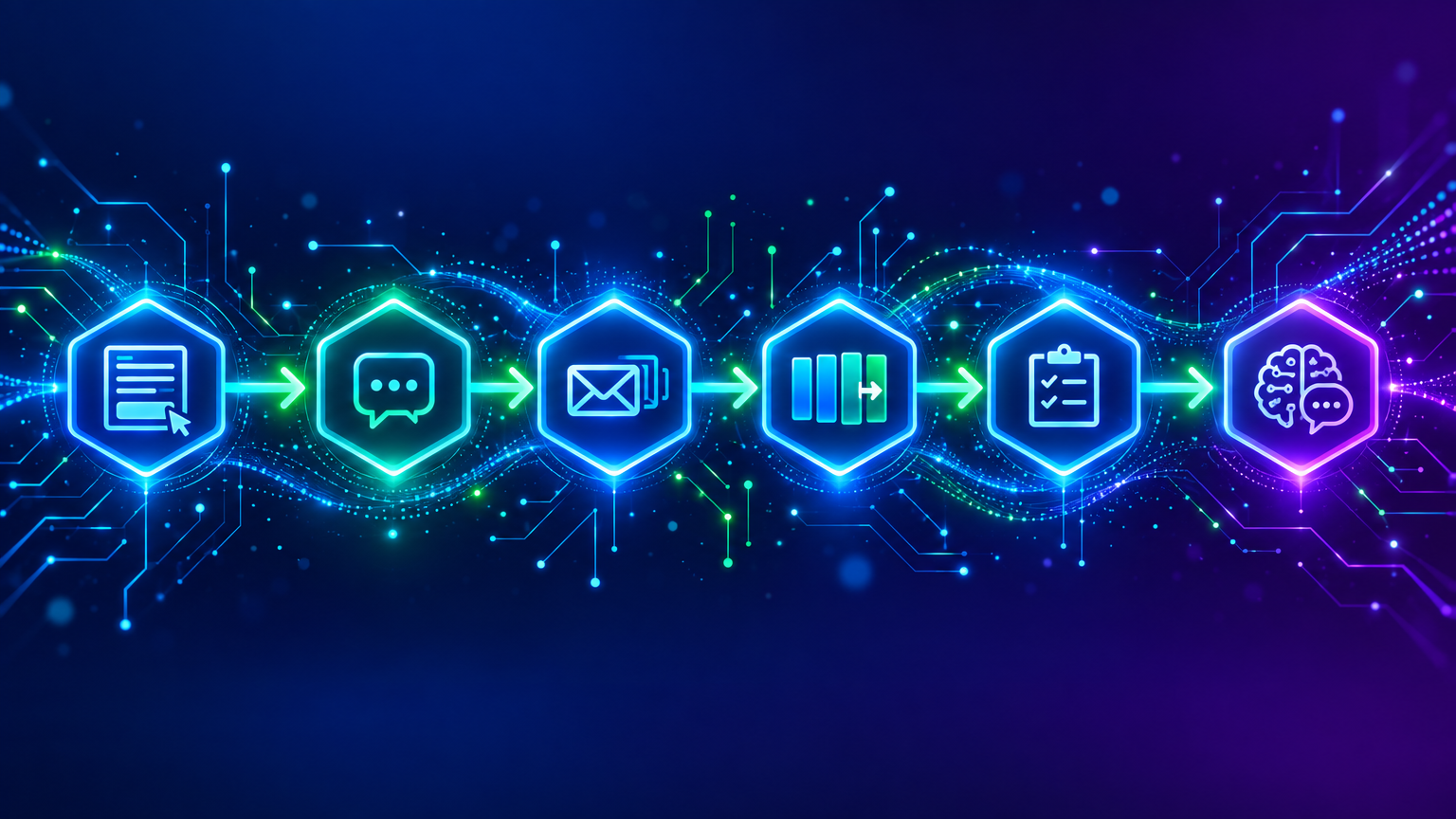
A production-grade trigger workflow is constructed from six foundational layers that operate seamlessly behind the scenes:
- 1. Event Triggers: Real-time hooks that initiate automation, including web form submissions, appointment confirmations, missed phone calls, payment webhooks, or inbound social DMs.
- 2. Conditional Filters: Rigorous evaluation gates ensuring actions only execute when prerequisites match (e.g., Lead Quality Score > 70, Geography = Singapore, Pipeline Stage = Unassigned).
- 3. Wait and Delay Modifiers: Strategic pacing nodes that respect natural human rhythm, allowing sequences to simulate realistic conversational timing rather than robotic spam.
- 4. Multichannel Action Nodes: Automated executions such as sending rich WhatsApp notifications, firing two-way SMS dialogues, updating deal stages, provisioning client folders, and assigning priority tasks.
- 5. If/Else Behavioral Branches: Intelligent paths that fork according to whether a prospect opened an email, clicked a proposal link, replied with objections, or booked a calendar slot.
- 6. Conversion Goals: Defined milestones that immediately terminate prospect nurture sequences the second a client converts, preventing embarrassing post-purchase follow-ups.
The 10 High-Converting Trigger Automations Scaling Smart SMEs
When engineering your automation architecture inside an AI CRM, focus on high-leverage friction points where revenue commonly leaks. Below are the ten most profitable automated triggers deployed by top-performing organizations worldwide:
1. The 60-Second New Lead Ingestion & Qualification Trigger
The instant a prospect completes a form on your landing page, Google Ads, or Facebook Lead Ad, this trigger fires a coordinated sequence. The contact is created and tagged, an SMS or WhatsApp welcome message lands on the prospect's mobile within 45 seconds, an internal alert pings your sales representative with enriched company data, and an conversational AI agent initiates a qualifying dialogue. If the prospect indicates immediate buying intent, the AI delivers a self-service calendar booking link directly within the chat.
2. The Autonomous Missed-Call-to-Text Recovery Trigger
Industry data reveals that 30% to 40% of inbound calls to service businesses go unanswered during peak operating hours, lunch breaks, or after-hours. Every unanswered ring is an active buyer about to tap the next competitor on Google Search. With missed-call automation, the CRM intercepts the dropped call and automatically fires a friendly, conversational SMS within 30 seconds: 'Hi! Sorry we missed your call at DIGI5Y. How can we help you right now?' This simple automated safety net recovers up to 45% of otherwise lost callers.
3. The Frictionless Appointment Confirmation & Attendance Engine
Securing a meeting on your calendar is only half the battle; no-show rates routinely hover around 30% to 40% when manual reminders are neglected. An appointment trigger automatically deploys an immediate calendar invite with video links, a 48-hour reminder SMS, a 24-hour value-focused email containing case studies and preparation notes, and a 2-hour final SMS prompt with one-tap rescheduling options. Clinics and consultancies deploying this exact protocol consistently slash no-shows to under 4%.
4. Behavioral Email Engagement & Retargeting Triggers
Rather than blasting generic newsletters to a cold list, intelligent AI CRMs monitor user interaction. If a prospect opens an introductory email but takes no action, the system pauses for 24 hours before delivering a follow-up addressing common industry objections. If the recipient clicks a pricing link or audits page, the CRM tags them as a 'High-Intent Prospect,' alerts their assigned account executive, and triggers a personalized check-in offering a VIP demonstration.
5. Real-Time Payment Reception & Instant Onboarding Activation
Buyer remorse sets in when there is dead silence after a transaction. The moment a client card is charged or an invoice is settled, the payment trigger executes instantaneously: generating an official receipt, migrating the contact stage from 'Opportunity' to 'Active Client,' removing them from marketing sequences, spinning up a dedicated client portal, and emailing a welcome kit with clear next steps and onboarding questionnaires.
6. Granular Tag-Driven Segment Journeys
Hyper-personalization at scale is impossible without dynamic tagging. When a prospect attends an executive webinar, downloads a specific whitepaper, or interacts with a booth at a conference, specialized tags (such as 'Attended-Webinar-Q3' or 'Enterprise-Tier') trigger customized micro-sequences. Prospects receive hyper-relevant case studies matching their exact industry and company size instead of generic marketing fluff.
7. Stalled Pipeline Stage Reactivation Triggers
Deals frequently stall after the initial discovery presentation. When an opportunity remains in 'Proposal Sent' for longer than 72 hours without status updates, the pipeline automation triggers an internal reminder for the deal owner, while subtly sending the prospect an educational video breakdown or a customer testimonial addressing contract implementation. If no reply occurs after 7 days, a gentle executive check-in is queued automatically.
8. Automated Dormant Database Reactivation Campaigns
Most businesses sit on a goldmine of thousands of past leads who inquired months ago but never purchased. A dormant lead trigger scans the database for contacts with no activity in 60, 90, or 180 days and deploys a conversational reactivation message: 'Hi [First Name], we are updating our records for [Company]. Are you still looking for help with [Service], or should we take you off our list?' These short, 9-word emails routinely generate tens of thousands of dollars in booked business without spending a single cent on paid advertising.
9. Post-Service Review Collection & Reputation Compounding
Online reviews and social proof are the primary drivers of modern inbound organic trust. Two hours after a service or project is marked complete in the CRM, an automated SMS requests quick feedback. If the customer rates the experience positively, an automated branch immediately sends a direct Google Review link. If feedback is negative, the system flags the operational manager for immediate phone intervention before negative reviews surface online.
10. Omnichannel Inbound Message Routing & AI Voice Agent Integration
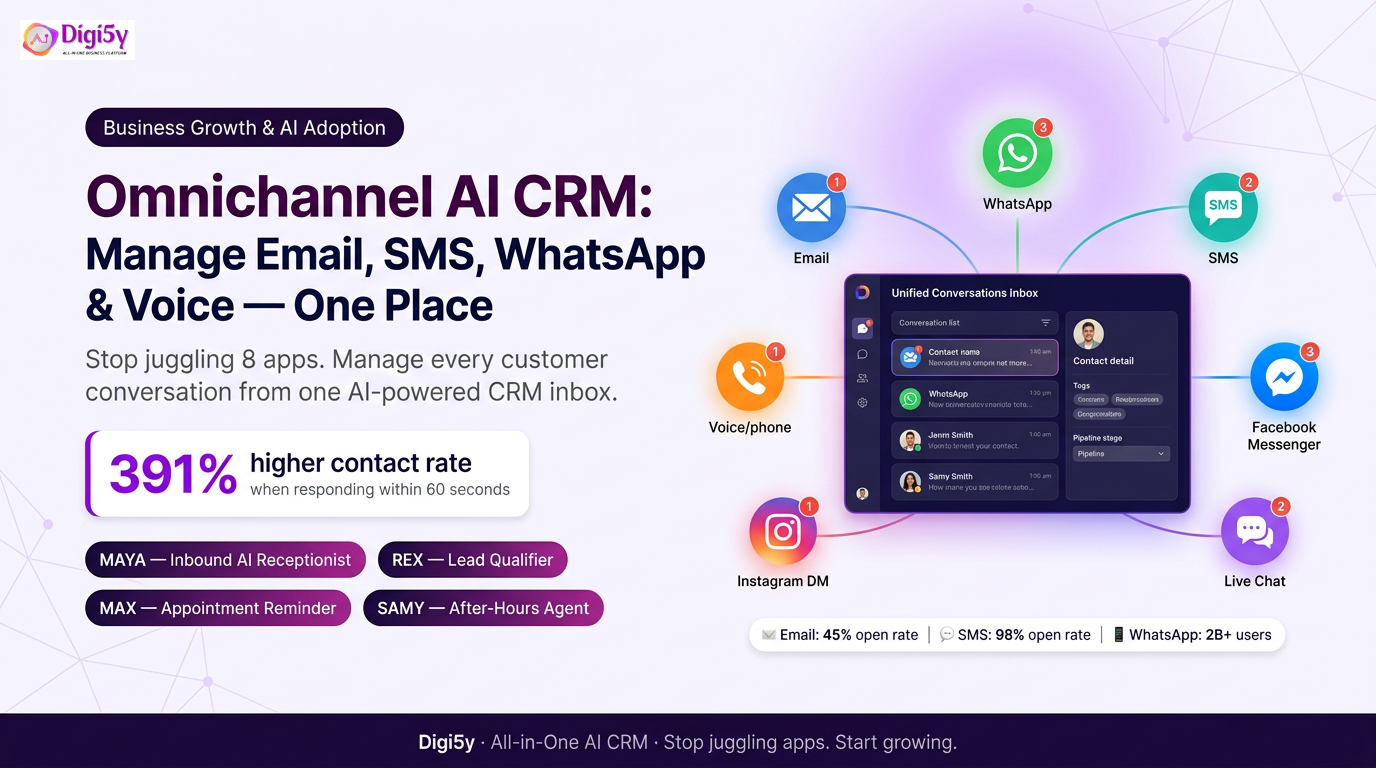
Modern consumers reach out across Instagram DMs, Facebook Messenger, live website widgets, WhatsApp, and SMS. An omnichannel trigger ingests every conversation into a unified smart inbox. Natural language processing classifies intent, drafts context-aware responses based on your proprietary knowledge base, and escalates high-value VIP buyers to human specialists in real time.
⚡ Strategic Automation Principle
Never Automate Broken Chaos
Automation does not fix a broken business model; it simply scales your existing habits. If your sales script does not convert on the phone, broadcasting it to 10,000 leads via SMS will only burn your brand faster. Standardize your value proposition, validate your conversion checkpoints, and then automate the proven sequence to unlock exponential scale.
Empirical Case Studies: Verified Results Across Diverse Sectors
The financial impact of trigger-based automation extends across every vertical. Here is how specialized organizations leveraged DIGI5Y's automated architecture to achieve compound growth:
- Glow Aesthetics Clinic (Melbourne, Australia): Deployed automated SMS calendar confirmations and missed-call recovery, slashing consultation no-shows from 34% to 3% while recovering 22 staff hours each week.
- Keystone Commercial Realty (Dubai, UAE): Implemented immediate 60-second WhatsApp lead qualification workflows, achieving a 236% increase in qualified investor viewings within six weeks.
- Elevate Executive Coaching (Toronto, Canada): Replaced monthly generic newsletters with behavioral click-triggered micro-sequences, elevating email open rates from 18% to 54% and doubling enrollment.
- Hartley & Partners Legal (London, UK): Automated initial client intake forms and document collection workflows, compressing onboarding duration from 3.5 hours down to 24 minutes.
- Apex Business Advisory (Singapore): Ran automated dormant reactivation sequences across 1,800 historic contacts, unlocking S$14,200 in monthly recurring retainer fees within thirty days.
The 6 Dangerous Pitfalls That Sabotage Automation Performance
While trigger-based workflows offer immense commercial leverage, poorly planned automations can irritate prospects and damage brand credibility. Avoid these critical mistakes when designing your system:
- Pitfall 1: Message Overload. Bombarding a new contact with three SMS texts, two phone calls, and four emails within twenty minutes feels aggressive and triggers immediate unsubscribe requests. Space out your touchpoints with strategic wait steps.
- Pitfall 2: Neglecting Fallback Goals. If a prospect books a discovery call on touchpoint two, ensure your system includes goal exit criteria that automatically removes them from subsequent aggressive booking prompts.
- Pitfall 3: Stale & Robotic Personalization. Relying solely on 'Hi [First_Name]' is no longer enough. Modern AI CRMs allow you to dynamically insert specific service interests, geographic references, and behavioral context into every interaction.
- Pitfall 4: Channel Disconnection. Running email on one platform, SMS on another, and appointments in a third disconnected calendar creates fragmented data silos where leads slip through the cracks.
- Pitfall 5: Lack of Human Oversight. AI should handle repetitive qualification and scheduling, but complex negotiations, empathy-driven complaints, and high-ticket objections must always have seamless human handoff protocols.
- Pitfall 6: Set-and-Forget Complacency. High-performing revenue teams treat workflows as living systems, conducting monthly cohort audits on delivery rates, response velocity, and pipeline progression.
Frequently Asked Questions
What is the primary difference between trigger-based and scheduled automation?
Scheduled automation fires at arbitrary calendar times regardless of what the user is doing (for example, sending a batch newsletter every Tuesday at 10 AM). Trigger-based automation is dynamically activated by real-time customer actions (such as submitting an inquiry, clicking a pricing link, or abandoning a booking form). Because trigger-based messages arrive in direct response to user intent, they generate up to 8x higher engagement and conversion.
Do I need software engineering or coding skills to build these workflows?
Not at all. Modern platforms like DIGI5Y feature drag-and-drop visual workflow canvases. You simply select an event trigger, configure pre-built action blocks (like Send WhatsApp or Create Task), and set condition branches using intuitive dropdown menus. AI workflow assistants can even generate complete sequences from plain English prompts.
How does the system respond when customers reply outside business hours?
The trigger automation engine runs continuously 24/7/365 on cloud infrastructure. If a prospect enquires at 2:30 AM on a Sunday, the AI assistant responds instantly, answers preliminary questions, verifies qualification criteria, and locks in a meeting for Monday morning without requiring human intervention.
Which three workflows should a small business implement first?
To achieve immediate ROI within the first 14 days, begin with: 1) A 60-second inbound lead response sequence; 2) An automated missed-call-to-SMS recovery workflow; and 3) An appointment confirmation and reminder sequence with no-show prevention.
Can trigger-based workflows integrate with external software tools?
Yes. Through enterprise webhooks and API connectors, DIGI5Y workflows easily synchronize with external accounting systems, custom mobile apps, inventory software, and third-party advertising platforms.
How do we prevent automated messages from feeling robotic or impersonal?
By leveraging large language model integration inside the workflow. Rather than sending rigid boilerplate templates, DIGI5Y's generative AI crafts personalized, context-aware messages that sound conversational, empathetic, and uniquely tailored to each prospect's specific questions.
Your competitors are already running sub-60-second trigger automation, recovering missed calls, and qualifying leads while their teams sleep. Stop letting valuable revenue leak through the cracks of manual follow-up. Take the two-minute GrowthScore™ audit to benchmark your sales systems and discover exactly where your funnel is leaking leads.
Read Next: Popular Growth Playbooks
Get the AI Edge Delivered Weekly.
Join 12,000+ founders and operators getting our freshest business automation software playbooks, AI employee agents news, and revenue-boosting hacks — straight to your inbox. No fluff. Just growth.