AI CRM for Small Business in Singapore: Why Smart SMEs Are Automating in 2026
Across Singapore, SME owners are caught in the same cycle: too busy to market properly, too stretched to follow up every lead, and bleeding $1,700+/mo on disconnected apps. Discover how an AI CRM automates lead capture, WhatsApp follow-ups, and review generation on autopilot.
Key Takeaway for Business Owners
Running a small business in Singapore in 2026 requires more than hard work — it demands intelligent infrastructure. With rising customer acquisition costs and fierce market competition, forward-thinking SMEs are replacing fragmented apps with unified AI CRM systems that respond to leads within seconds, automate multi-channel follow-ups on WhatsApp, SMS, and email, and recover up to 15 hours of lost admin time each week.
The engine at the centre of Singapore's most competitive small businesses in 2026 isn't a larger headcount — it is an intelligent AI CRM running on autopilot.
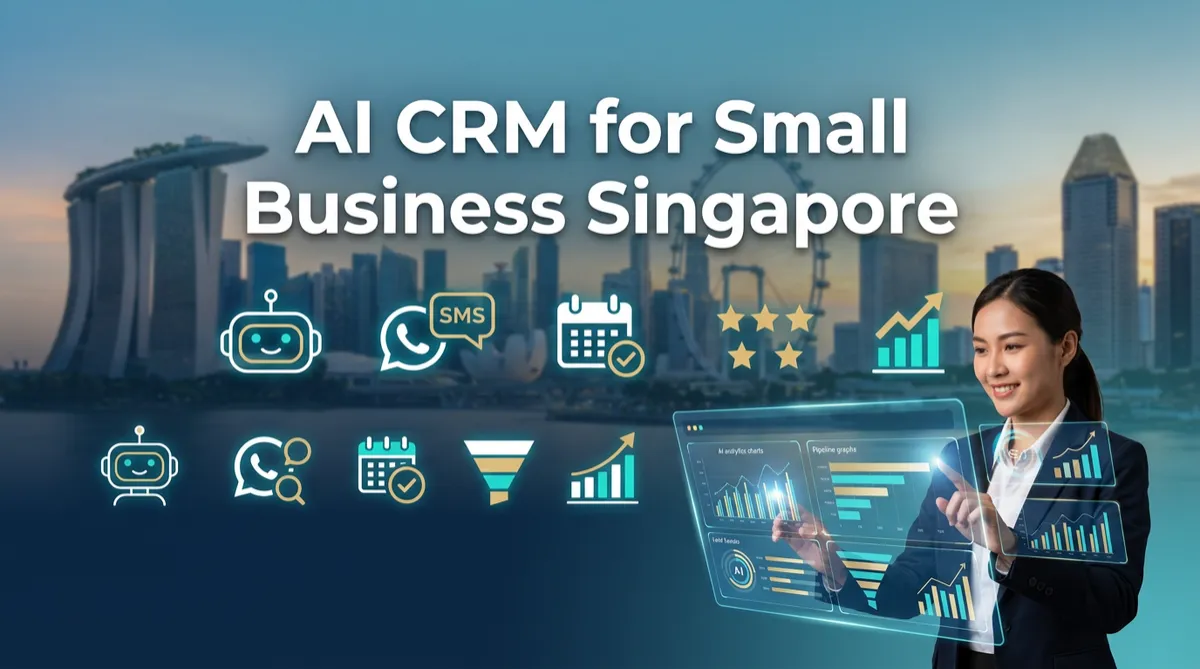
A modern AI CRM combines lead pipelines, unified multi-channel communication, and automated workflows into one central hub.
The Honest Truth About Running a Small Business in Singapore Right Now
Let's skip the pleasantries.
You built your business through hard work, long hours, and showing up every single day. You know your craft better than anyone. But somewhere between serving customers, managing staff, and keeping the books, the business itself started running you instead of the other way around.
Sound familiar?
You are not alone. Across Singapore, thousands of SME owners are caught in the same cycle: too busy to market properly, too stretched to follow up every lead, and too tired to figure out which of the five apps they're paying for is actually doing anything useful.
The problem is not your work ethic. The problem is your infrastructure.
In 2026, the most competitive small businesses in Singapore are not necessarily working harder than their rivals. They are running smarter systems. And the engine at the centre of those systems is something called an AI CRM.
So What Exactly Is AI CRM In Plain Language?
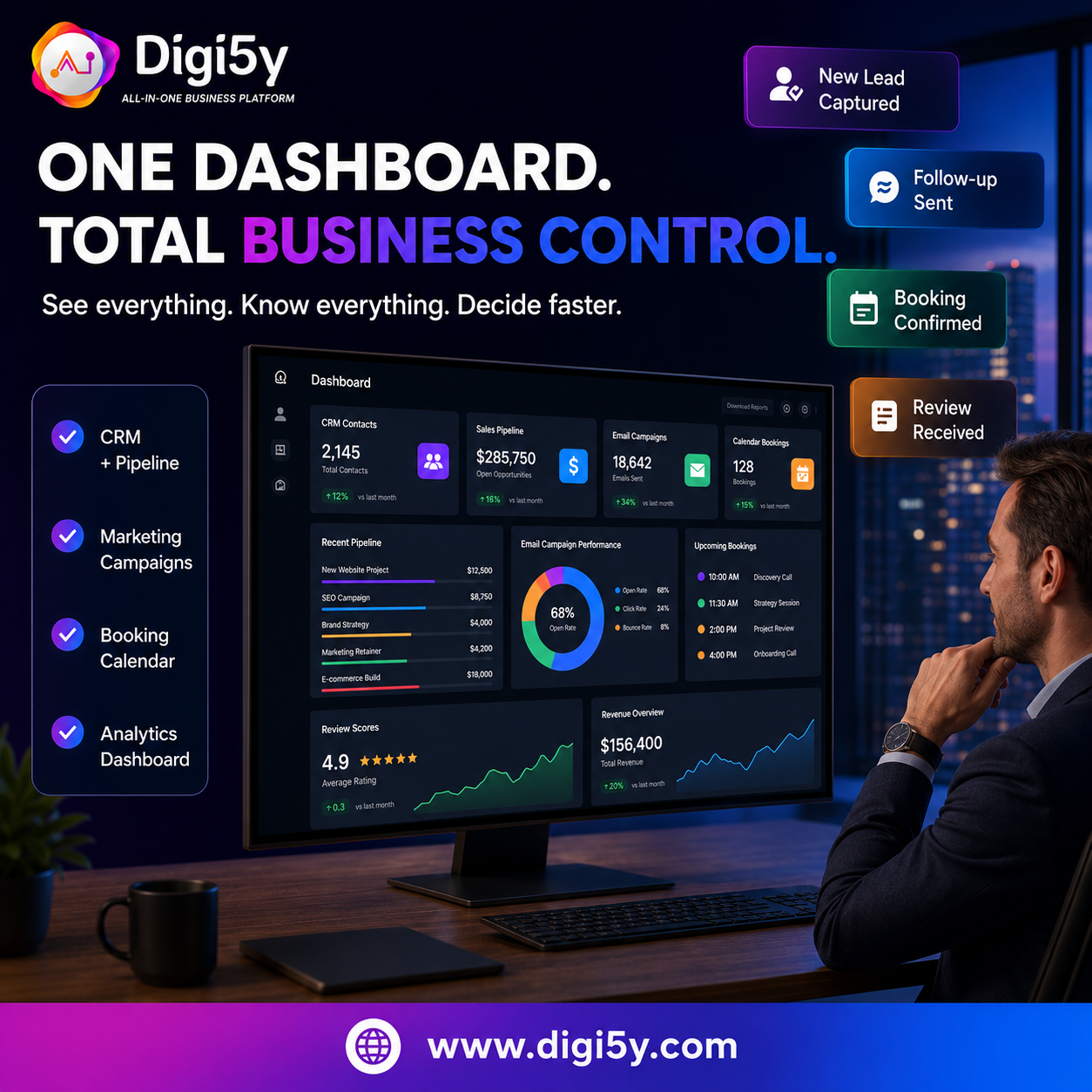
One Dashboard, Total Business Control: see everything, know everything, and decide faster with a unified AI CRM.
You have probably heard of CRM before. Customer Relationship Management software. In its basic form, it is a fancy digital address book where you store customer details, log interactions, and set reminders to follow up.
It is fine. It is just not enough anymore.
An AI CRM is a completely different animal. Think of it less like software and more like hiring a full digital team that works around the clock, never calls in sick, never forgets to follow up, and never misses a lead — for a fraction of what a single employee costs.
Where a traditional CRM waits for you to take action, an AI CRM takes action for you.
- When someone submits an enquiry through your website at 10pm on a Tuesday, your AI CRM responds within seconds personally, professionally, and automatically. It qualifies the lead, books an appointment if they're ready, or starts a nurture sequence if they need more time — all without you touching your phone.
- When a customer finishes an appointment, your AI CRM sends a review request at exactly the right moment when the experience is fresh and the customer is happy. No more awkwardly asking face-to-face. No more forgotten follow-ups.
- When your sales pipeline starts stalling, your AI CRM flags it showing you exactly which deals need attention and which leads have gone cold, so your team focuses their energy where it actually matters.
This is not automation for automation's sake. This is your business running intelligently with systems handling the repetitive, time-consuming work so you can focus on what only you can do.
Why Singapore Businesses Cannot Afford to Wait
Here is the uncomfortable reality facing Singapore SMEs right now.
The market is more competitive than it has ever been. Customer expectations are higher. The cost of acquiring attention online and offline keeps rising. And the gap between businesses running on smart systems and those still relying on manual processes is growing wider every single quarter.
Consider this: the average Singapore SME owner loses more than 15 hours every week to tasks that an AI system could handle automatically. That is nearly two full working days, every week, spent on admin that a machine could do better and faster than any human.
Meanwhile, 82% of SMEs operate without a consistent digital presence — no automated follow-up, no reliable lead capture outside business hours, no system for collecting reviews. They are essentially invisible to a segment of customers who have already decided to buy, just not yet from whom.
And then there is the speed problem. An AI CRM responds in seconds. Every time. To every lead. From every channel. That is not a minor operational improvement. It is a fundamental competitive advantage.
The Real Cost of Disconnected Tools
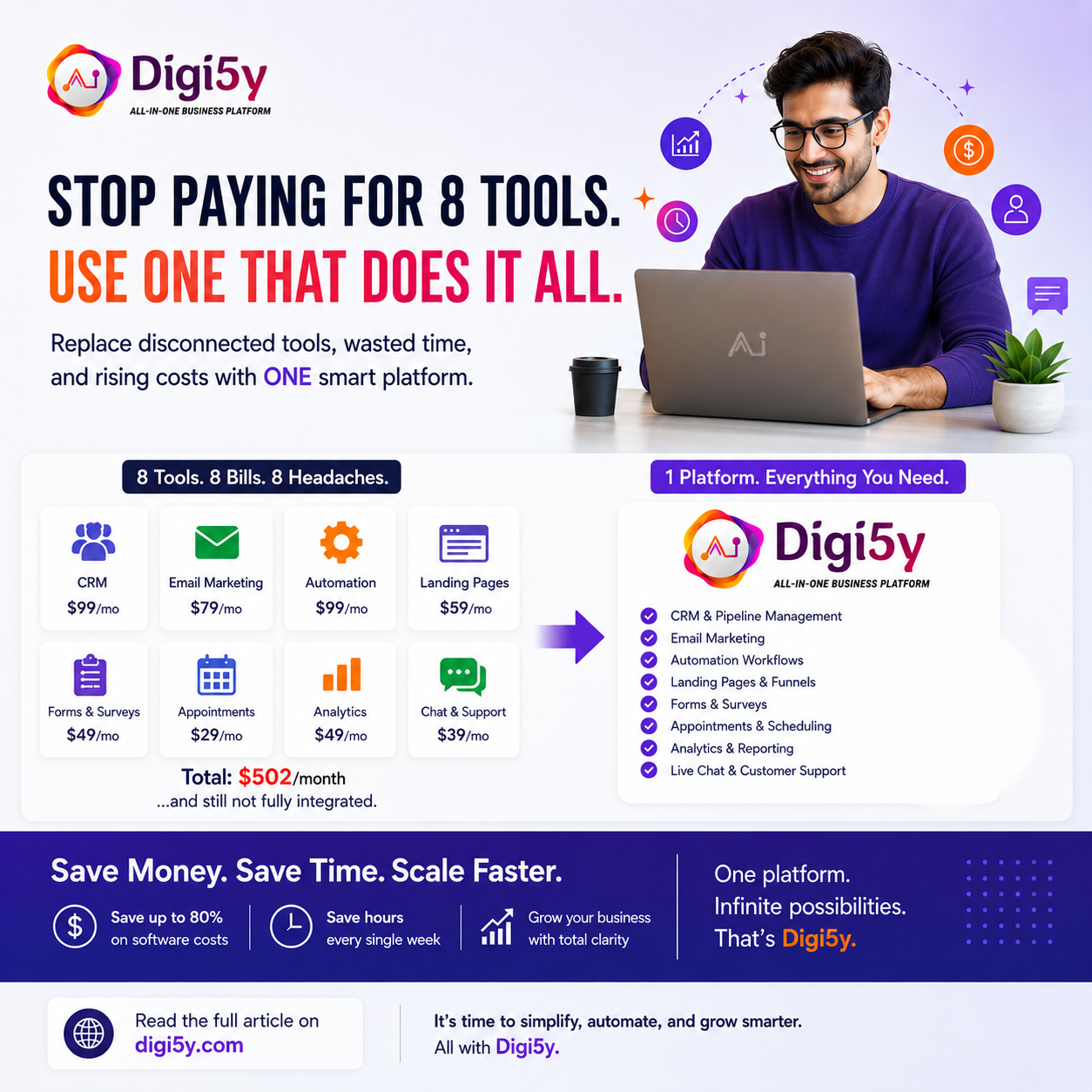
Stop paying for 8 separate tools: consolidating your stack cuts software spend while eliminating broken handoffs.
Before we talk about what AI CRM does, it is worth talking about what most Singapore businesses are doing right now and what it is actually costing them.
Walk through a typical Singapore SME's tech stack and you will usually find something like this: a CRM tool for contacts, an email marketing platform for campaigns, a separate SMS tool for promotions, a booking app for appointments, a social media scheduler, a review management platform, maybe a landing page builder, and a spreadsheet or two filling the gaps between all of them.
Each tool costs money every month. Each has a separate login. None of them talk to each other properly. And when something falls through the cracks — a lead not followed up, a booking confirmation not sent, a campaign that ran to the wrong audience — you only find out when a customer complains or a deal goes cold.
💰 The Disconnected Tool Tax
S$1,700+ Spent Monthly on Redundant Subscriptions
The average combined cost of separate tools exceeds $1,700 per month. That figure does not include the hidden cost of staff time spent managing them, duplicating data, and fixing sync breakages. A unified AI CRM consolidates everything into one connected system starting from $99/mo.
The question is not whether you can afford an AI CRM. The question is whether you can afford to keep paying for the alternative.
How AI CRM Transforms Your Business: Three Phases That Actually Work
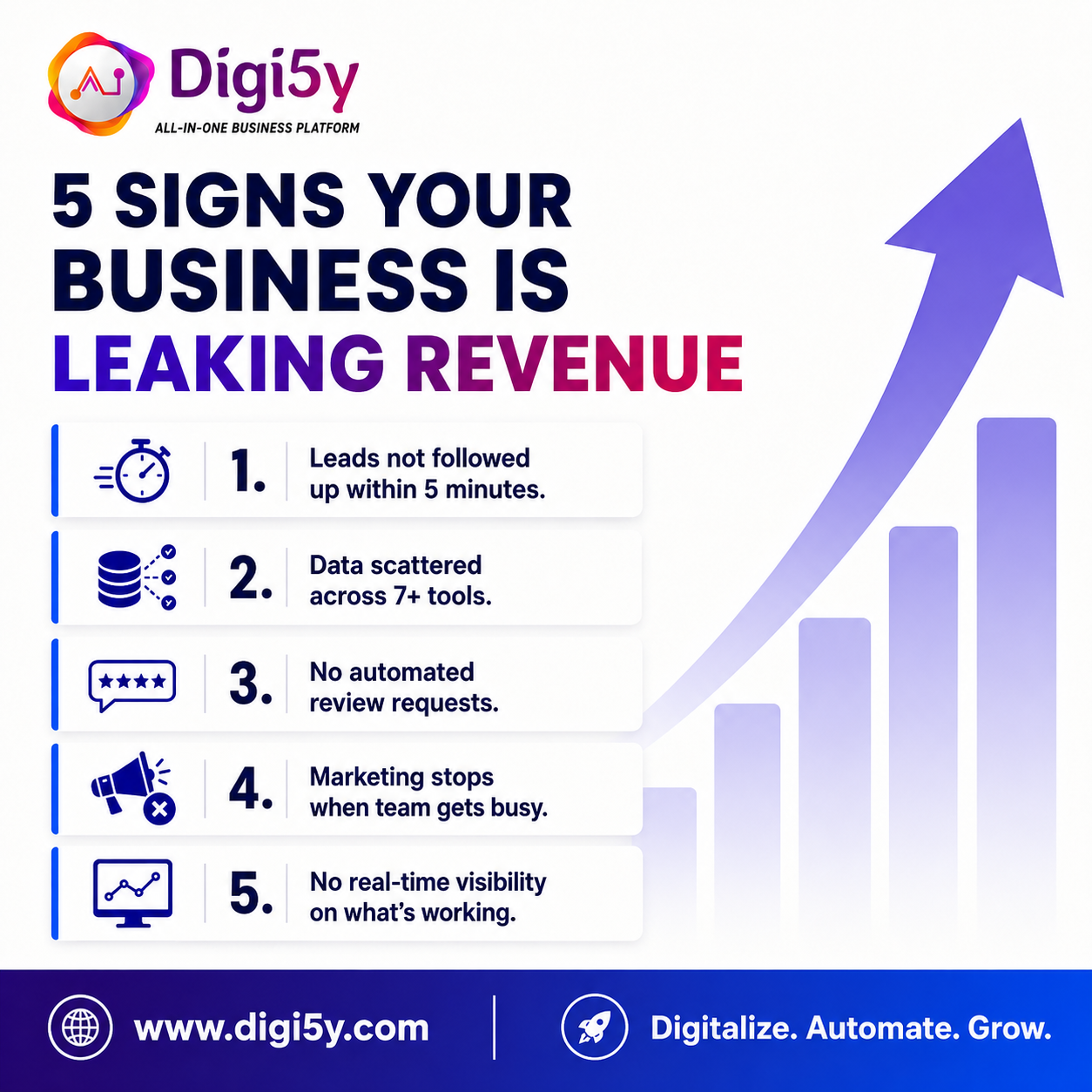
The three phases of AI CRM transformation: seal revenue leaks, accelerate sales velocity, and build compounding business intelligence.
A good AI CRM does not just automate tasks in isolation. It transforms how your entire customer journey operates from the first enquiry to the long-term relationship. Here is how it works in practice.
Phase One: Seal the Leaks
Before you can grow, you need to stop losing what you already have. Most Singapore businesses are leaking revenue through slow lead response, missed follow-ups, and no-shows. Phase one closes these gaps.
Every enquiry from every channel — your website, Instagram DMs, Google Business Profile, WhatsApp, phone — gets captured instantly and responded to automatically. No leads fall through. No lead waits. Appointment reminders go out automatically, dramatically reducing no-show rates. And your pipeline becomes visible in real time, so you always know where every deal stands. For many businesses, this phase alone generates a measurable revenue impact within the first 30 days.
Phase Two: Accelerate Revenue
With the leaks sealed, the system shifts to growth. Automated nurturing sequences keep your leads warm across email, SMS, and WhatsApp without your team manually managing each conversation. Multi-channel campaigns run automatically. Review requests go out after every completed service, building your Google rating consistently over time. And your pipeline progresses by stage automatically, with smart follow-ups triggered at exactly the right moment.
This is where businesses start reporting significant increases in conversion rates — not from more leads, but from better follow-through on the leads they already have.
Phase Three: Build Business Intelligence
Once your systems are running and your pipeline is growing, the third phase delivers something most Singapore SME owners have never had: genuine business intelligence.
AI agents handle customer enquiries, bookings, and routine support around the clock. Revenue dashboards show you exactly which campaigns are generating returns and which are draining budget. Growth analytics reveal patterns in customer behaviour that inform smarter decisions. And the system continues to optimise itself — flagging what is working and surfacing what needs attention so growth becomes predictable rather than accidental.
What This Looks Like for a Real Singapore Business
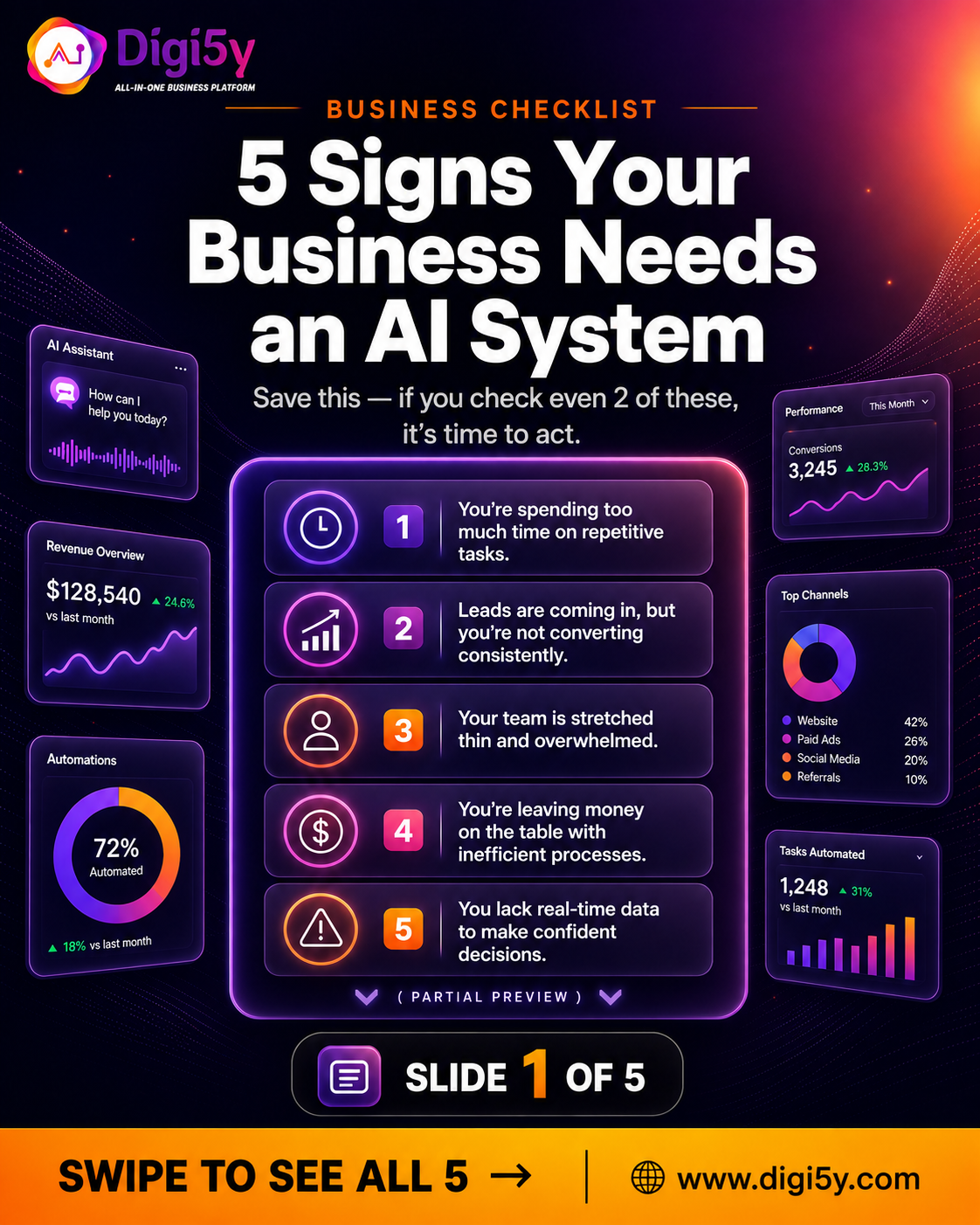
Real-world checklist: 5 signs your business needs an AI system to eliminate bottlenecks and scale operations.
Let's make this concrete.
Imagine you run a professional services firm in Singapore — a consultancy, a law practice, a financial advisory, or an accounting firm. You have a capable team, a solid client base, and a genuine reputation in your field.
But your new lead process looks like this: someone fills in your contact form, you or your assistant sees it the next morning, drafts a reply, sends it, and then follows up a few days later if you remember. Some leads book a call. Many don't reply. A handful go to a competitor without you ever knowing why.
Now imagine the same business running on an AI CRM. The same lead submits the form. Within 30 seconds, they receive a personalised response by name, referencing what they enquired about with a direct booking link. If they book, they receive confirmation and reminders automatically. If they don't, a nurture sequence runs over the following days — a helpful email, a WhatsApp check-in, a case study relevant to their enquiry — all without your team touching it.
Three weeks after they become a client, they receive an automated review request at exactly the right moment. Your Google rating improves. Your next prospect sees five more 5-star reviews than last month and chooses you with more confidence. Same business. Same team. Dramatically different results.
"A boutique consultancy in Singapore operating across six disconnected tools consolidated its entire operation onto DIGI5Y and achieved measurable results within 45 days: eliminated data silos, gained 100% pipeline visibility, and reclaimed 14 hours per week for client-facing advisory work."
Frequently Asked Questions About AI CRM for Singapore Businesses
Frequently Asked Questions
Is AI CRM only for tech-savvy business owners?
Not at all. The best AI CRM platforms are built specifically for business owners, not developers. If you can use a smartphone, you can use an AI CRM. And most platforms offer dedicated onboarding support to get your system fully configured and operational without you needing to understand a single line of code.
How quickly will I see results?
Most businesses see a meaningful impact within the first 30–90 days. The fastest wins usually come from automated lead response and follow-up — areas where many SMEs are currently losing deals they should be winning. Revenue growth compounds over time as nurturing sequences mature and reputation management builds momentum.
What does it cost honestly?
Entry-level AI CRM plans for SMEs start from around $99 per month. When you factor in the tools it replaces — which often cost $500 to $2,000 per month in combined subscriptions — the net saving is significant before you account for the revenue it generates. Most businesses see a positive ROI within the first 90 days.
Can it handle WhatsApp which is how Singapore customers actually communicate?
Yes. Leading AI CRM platforms include native two-way WhatsApp automation, allowing you to send appointment reminders, run nurture sequences, respond to enquiries, and collect reviews through the messaging platform your Singapore customers actually use every day.
What if I already have a CRM?
The question is not whether you have a CRM — it is whether your CRM has AI built into it, whether it replaces your other tools, and whether it is actively growing your revenue or simply storing your contacts. Many Singapore businesses that have had a basic CRM for years find an AI-native platform delivers better results from week one.
Key Takeaways
The key insight from everything above is this: AI CRM is not a technology purchase. It is a business decision about whether your company will continue to compete on effort or start competing on intelligence.
- For Singapore small businesses in 2026, the gap between automated and manual operations is already significant. Every month of delay compounds that gap.
- Every lead that goes unanswered because no one was available, every review not requested because the timing was awkward, and every follow-up that never happened represents revenue lost to faster competitors.
- Getting started is faster and more affordable than most Singapore business owners expect — more leads captured, more deals closed, and more time returned to high-leverage work begin almost immediately.
Before You Go: Where Does Your Business Actually Stand?
Most business owners assume they know where their biggest problems are. In reality, the issues costing the most revenue are often not the obvious ones.
A free GrowthScore™ business audit changes that. In under five minutes, it evaluates your business across six key dimensions — digital visibility, lead capture, automation maturity, funnel effectiveness, online reputation, and brand credibility — and delivers a clear, personalised picture of where your greatest opportunities lie.
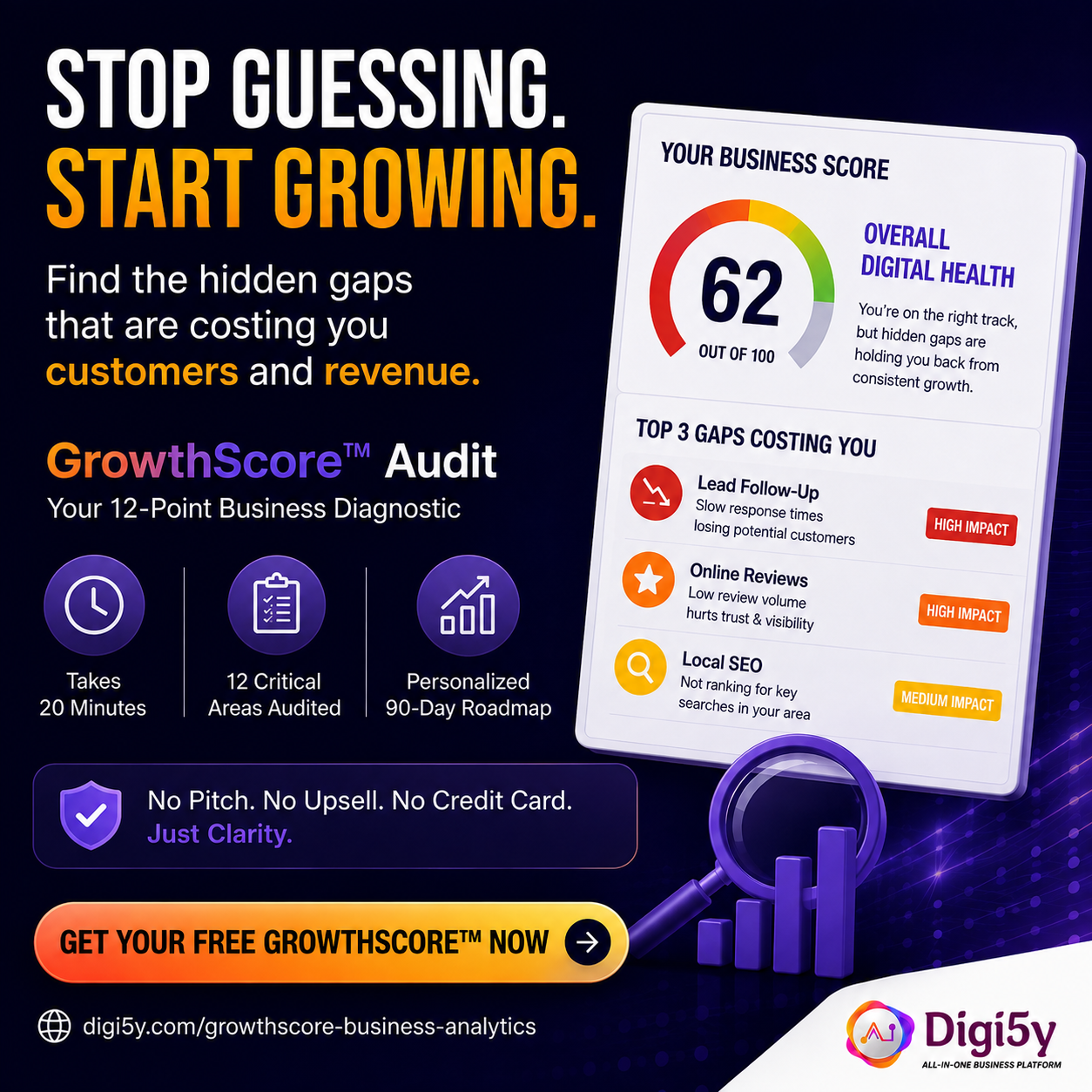
Stop Guessing, Start Growing: Find the hidden gaps costing your business revenue with a 12-point GrowthScore™ diagnostic.
If you are serious about growing your Singapore business smarter in 2026, take 5 minutes to run your free GrowthScore™ Audit or book a complimentary Discovery Call to explore what an AI CRM can do for your business.
Read Next: Popular Growth Playbooks

Get the AI Edge Delivered Weekly.
Join 12,000+ founders and operators getting our freshest business automation software playbooks, AI employee agents news, and revenue-boosting hacks — straight to your inbox. No fluff. Just growth.