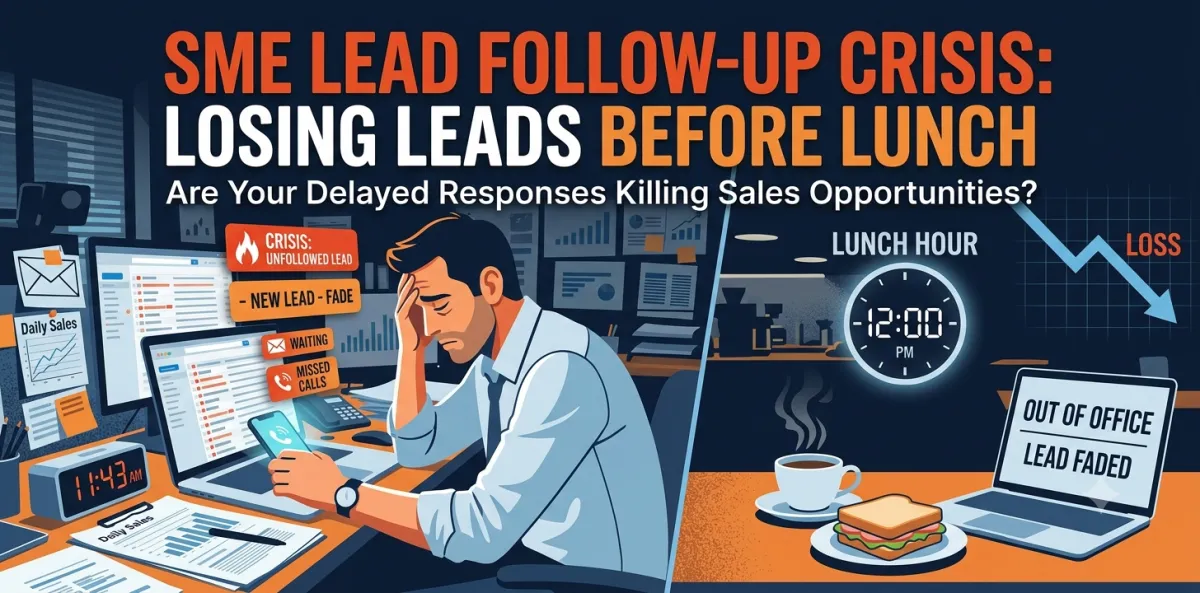
The SME Lead Follow-Up Crisis
You spent money on ads. You got clicks. Someone filled out your form. And then nothing happened fast enough. They went with a competitor who called them back first. This is the lead follow-up crisis, and it is quietly killing the growth of thousands of small businesses right now.
What the Research Actually Shows
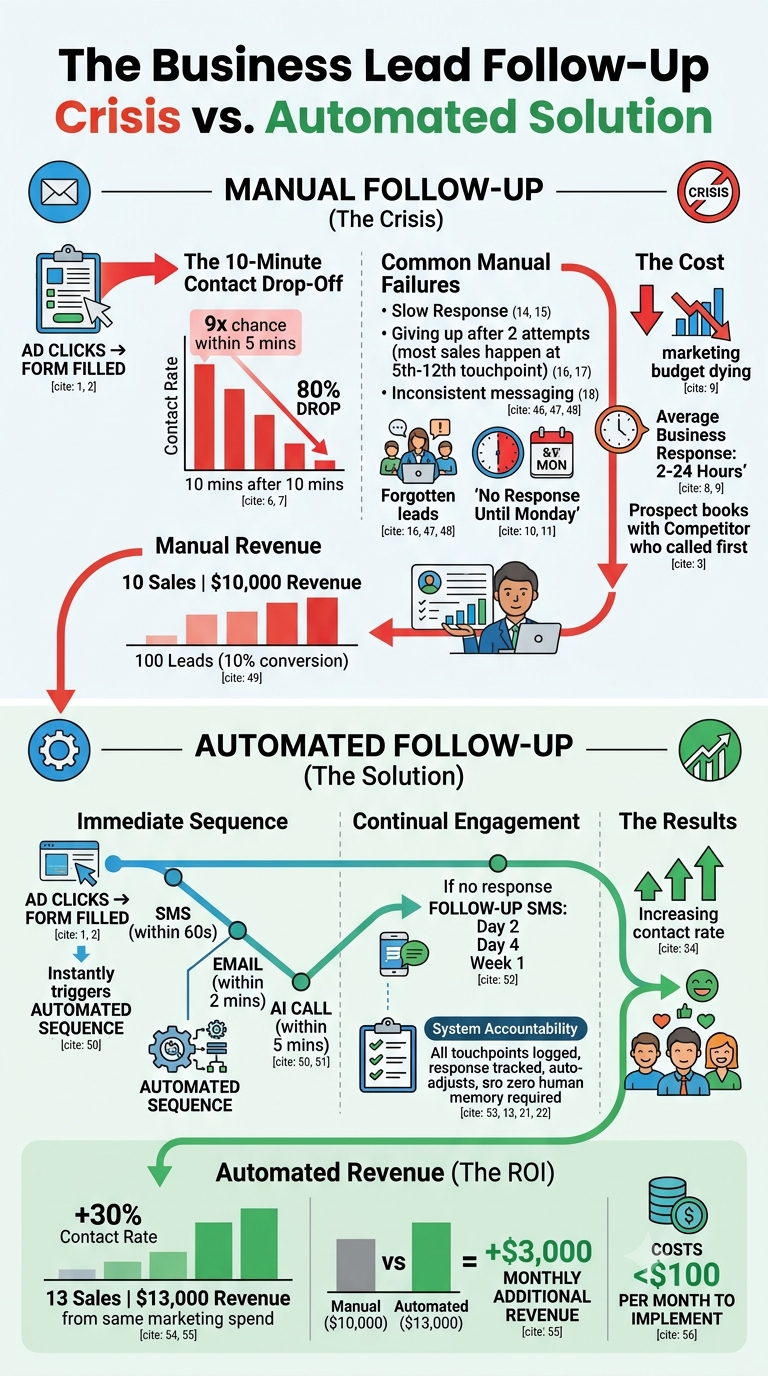
The data on lead response time is sobering. Companies that respond to a lead within 5 minutes are 9 times more likely to make contact than those that respond after 10 minutes. Contact rates drop by 80 percent after the first 10 minutes. And yet the average small business takes between 2 and 24 hours to respond to a new enquiry. That gap is where your marketing budget goes to die.
Why Manual Follow-Up Always Fails
Manual follow-up is not a people problem. It is a systems problem. When your team is busy, leads wait. When someone is sick, leads are forgotten. When a lead comes in at 6 pm or on a Saturday, no one sees it until Monday morning, when the prospect has already booked with someone else. Even well-intentioned teams drop the ball because there is no system holding them accountable. If follow-up depends on someone remembering to do it, eventually it will not get done.
The Three Most Common Follow-Up Failures
The first is the slow initial response. Speed is the only thing that matters in the first 5 minutes after a lead comes in, and most businesses fail here. The second is giving up too early. Most salespeople stop following up after 2 attempts. Most sales happen between the 5th and 12th touchpoint. The third is inconsistent messaging. When follow-up is done manually, every team member does it differently, and quality varies wildly.
What Automated Follow-Up Looks Like
With an automated follow-up system, a new lead triggers an immediate sequence: SMS within 60 seconds, email within 2 minutes, AI voice call attempt within 5 minutes. If the lead does not respond, a follow-up SMS goes out the next day, then three days later, then a week later. Every touchpoint is logged, every response is tracked, and the sequence adjusts based on what the lead does. This is available today and runs without anyone on your team needing to remember to do anything.
The Real Cost of Slow Follow-Up
If your business generates 100 leads per month and converts 10 percent of them, you are making 10 sales. If automated follow-up increases your contact rate by just 30 percent, you are making 13 sales from the same marketing spend. At an average deal value of $1,000, that is $3,000 per month in additional revenue from a process improvement that costs less than $100 per month to implement.
See How Your Business Scores
Take the free DIGI5Y GrowthScore audit and discover exactly where automation can unlock growth in your business.