7 business tasks should never done manually
In 2026, a growing divide has formed between businesses that automate the repeatable and those that keep doing it manually. The gap in productivity, cost, and customer experience between those two groups is widening every month. Here are 7 tasks your business should no longer be doing by hand.
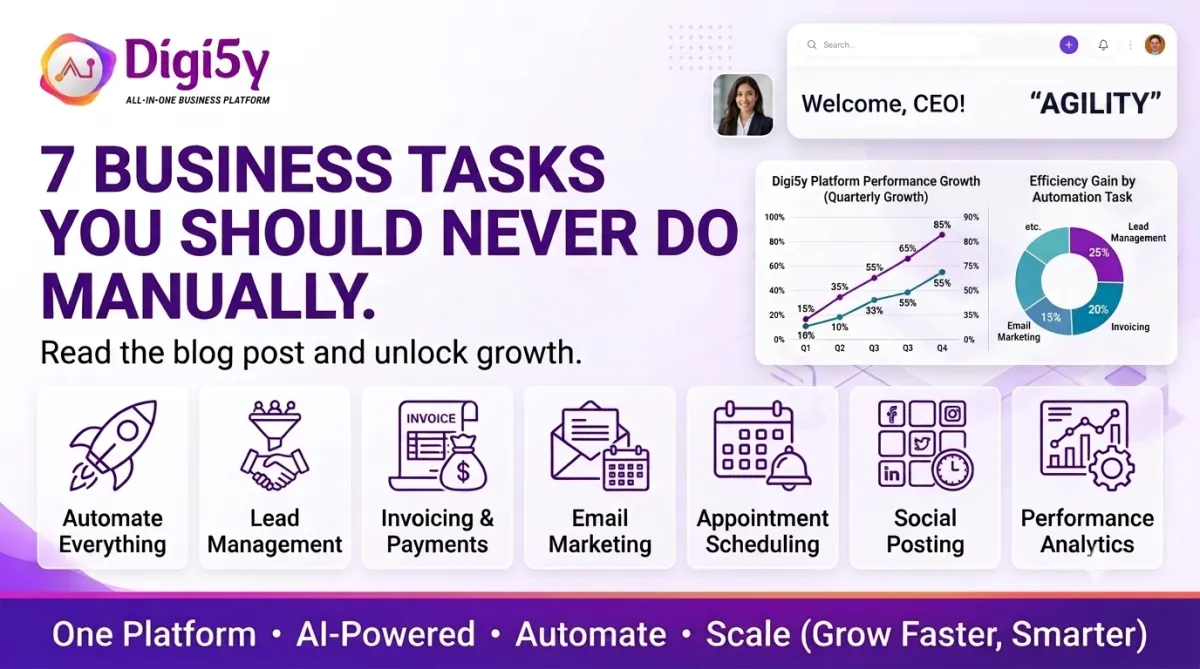
1. Lead Follow-Up
If someone fills out a form on your website and a human has to manually send the first reply, you are already losing deals. Automated follow-up should trigger within 60 seconds via SMS, email, and if appropriate, an AI voice call. This is table stakes in 2026.
2. Appointment Reminders
No-shows cost small businesses thousands of dollars every month. A two-step automated reminder at 24 hours before and 2 hours before can reduce no-show rates by 50 to 70 percent. Your team should never be calling or texting reminders by hand.
3. Review Requests
After every completed job or appointment, a review request should go out automatically. Most businesses know reviews matter but rely on their team to remember to ask. That system fails constantly. Automating it means every satisfied customer gets asked, every time.
4. Social Media Posting
Creating content is the creative work. Scheduling and publishing is not. If someone on your team is manually logging into Instagram, Facebook, and LinkedIn to post the same content three times, that time is wasted. A scheduler handles this once, across every channel, from one place.
5. Missed Call Response
When a customer calls and no one answers, they often move on to the next option in their search results. An automated missed call text-back sends an SMS within seconds: "Hi, we just missed your call. How can we help?" This single automation recovers a significant number of leads that would otherwise be lost permanently.
6. New Lead CRM Entry
When a form is submitted, a call is made, or a message comes in, that lead should automatically appear in your CRM, tagged correctly, with a task assigned to the right team member. Manually entering leads into a CRM is one of the most common sources of data loss in small businesses.
7. Re-engagement Campaigns
Your database contains contacts who expressed interest but never converted. Manually deciding who to follow up with and writing individual messages is not a system. An automated re-engagement campaign sends personalized messages to dormant contacts based on rules you define, surfacing warm leads from contacts you had written off.
The Compounding Benefit
Each of these automations provides individual value. Together, they create a business that operates more efficiently, responds faster, loses fewer leads, and delivers a more consistent customer experience without increasing your headcount. That combination is what separates growing businesses from stagnating ones in 2026.
See How Your Business Scores
Take the free DIGI5Y GrowthScore audit and discover exactly where automation can unlock growth in your business.